Backyard Science project receives pilot funding!

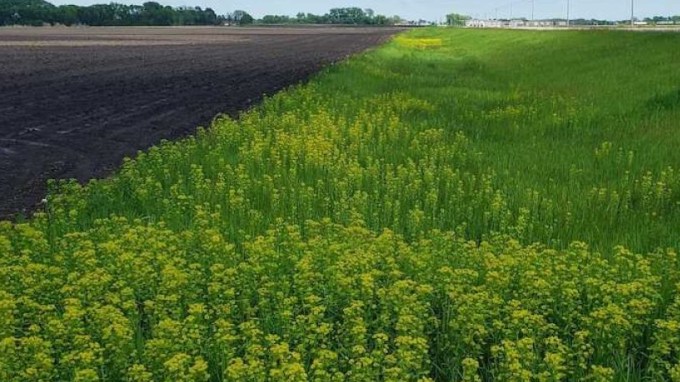
John, Amanda, and Dave were awarded an Institute on the Environment Mini Grant to pilot a new urban citizen science project, City Backyard Science. The three main areas the project addresses are: Conservation: How do we increase urban greening, habitat heterogeneity, and biodiversity? (There has been encouraging work showing that small green areas in cities … Continue reading Backyard Science project receives pilot funding!
John receives President’s Student Leadership and Service Award!

John Benning was selected to receive the President's Student Leadership and Service Award (PSLSA), which recognizes the accomplishments and contributions of outstanding student leaders at the University of Minnesota Twin Cities. It is presented to approximately one-tenth of one percent of the student body for their exceptional leadership and service to the University of Minnesota … Continue reading John receives President’s Student Leadership and Service Award!

New paper showing latitudinal and elevational gradients in seed predation from an international collaboration

John and Dave participated in an international collaborative experiment testing whether biotic interactions are stronger at low compared to high latitudes. The experiment was conducted from the equator to the arctic and from low to high elevation at each latitude. It is the first coordinated experiment involving real organisms to test this idea dating back … Continue reading New paper showing latitudinal and elevational gradients in seed predation from an international collaboration

New paper on species distribution models for the invasive plant, Palmer amaranth

Ryan, Tom, and Dave published a paper in Scientific Reports on species distribution models for Palmer amaranth, one of the most economically costly invasive species in North America. It has rapidly spread across the continent and devastated agriculture along the way. It only reached Minnesota in 2016 and it's future invasion potential is unknown. In … Continue reading New paper on species distribution models for the invasive plant, Palmer amaranth

Adam awarded Lake Minnetonka Garden Club Scholarship!

Adam Kostanecki, undergraduate researcher in the lab, was chosen to receive the Lake Minnetonka Garden Club scholarship. He was recognized for his "outstanding application, academic record, commitment to your education and community and your career goals in Botany research and public policy" Congrats Adam! (Gratulacje!)

NSF Speciation and mating system evolution grant funded

The Moeller Lab, in collaboration with Emma Goldberg (UMN EEB) and Yaniv Brandvain (UMN PMB), received four years of funding ($974,762) to investigate the role of mating system transitions in plant speciation. This new funding continues past work that revealed reproductive character displacement between incipient Clarkia species, and provided evidence of reinforcement in secondary sympatry. … Continue reading NSF Speciation and mating system evolution grant funded

Stephanie successfully defends masters thesis!

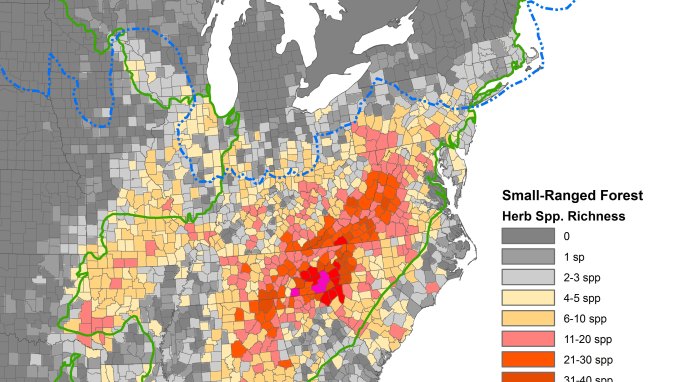
Stephanie gave a seminar and defended her masters thesis titled, "History, dispersal limitation, and environment shape the current and future ranges of forest herbs of the Southern Appalachians". For her thesis, she developed species distribution models for 8 forest herb species, half of which are narrow endemics to the Southern Appalachians. She examined the extent … Continue reading Stephanie successfully defends masters thesis!